
Decoding heterogeneity in hematopoietic aging
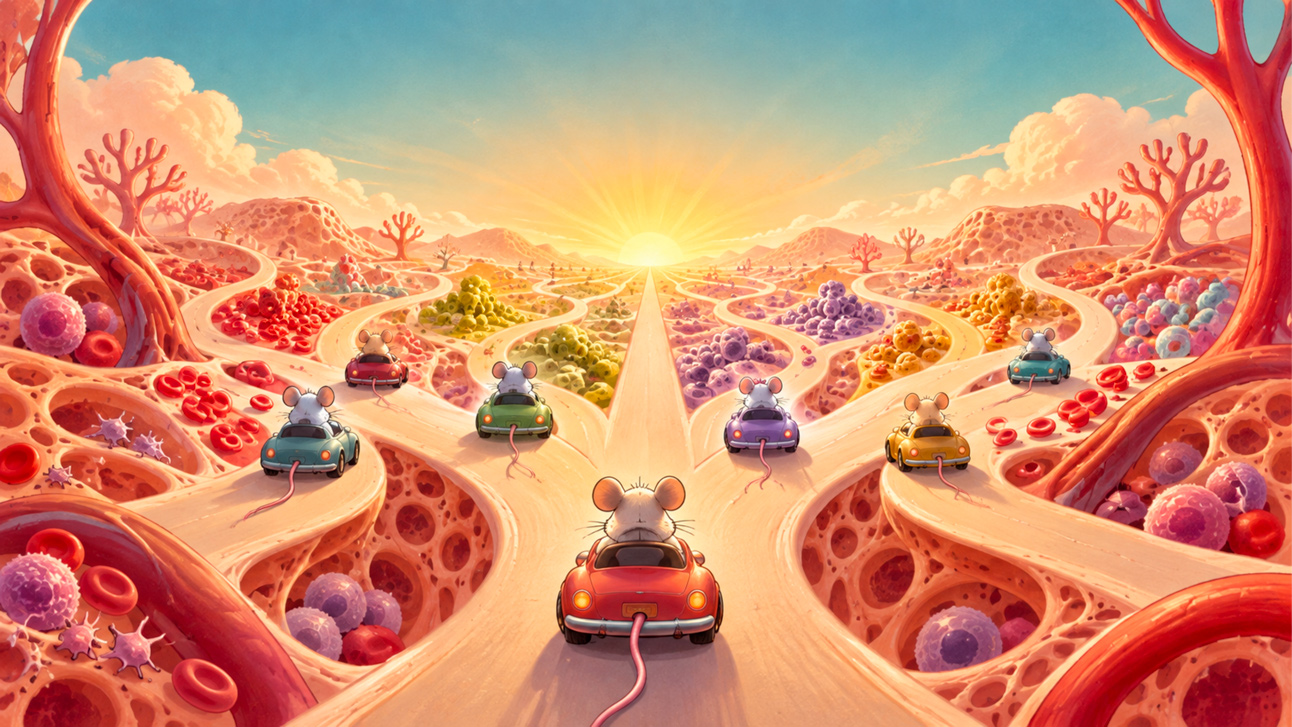
Organismal aging arises from complex genetic and environmental interactions, making its mechanisms difficult to dissect. To minimize these variables, we profiled hematopoiesis in a large cohort of young and aged inbred female C57BL/6J mice housed under identical conditions, assessing blood, bone marrow, spleen, and transplantation phenotypes. Aged mice recapitulated expected hematopoietic aging features but showed striking inter-individual heterogeneity: some retained youthful traits, while others displayed pronounced age-associated changes. Even within individuals, canonical aging phenotypes varied independently, suggesting that hematopoietic aging does not follow a single trajectory. Using bone marrow single-cell RNA-seq, we generated cell type-specific aging scores and found broad transcriptomic variability among aged mice. Intercellular communication analysis linked distinct aging phenotypes to inflammatory signaling axes in the bone marrow niche. Neutrophil-derived Oncostatin M was associated with remodeling of the AdipoCAR-HSC niche axis and myeloid bias, whereas neutrophil-to-AdipoCAR IL-1 signaling correlated with anemia. These findings indicate that hematopoietic aging proceeds through multiple independent routes shaped by distinct inflammatory cell-cell communication programs within the bone marrow.
Invited by
Research team(s)
Location
Salle de conférence E1031, CBI
Speaker(s)
Dr. Charles DUSSIAU
EMBL, Heidelberg
Allemagne