
A partially redundant role for the Drosophila DJ-1 homologs in protection against oxidative stress and glycation
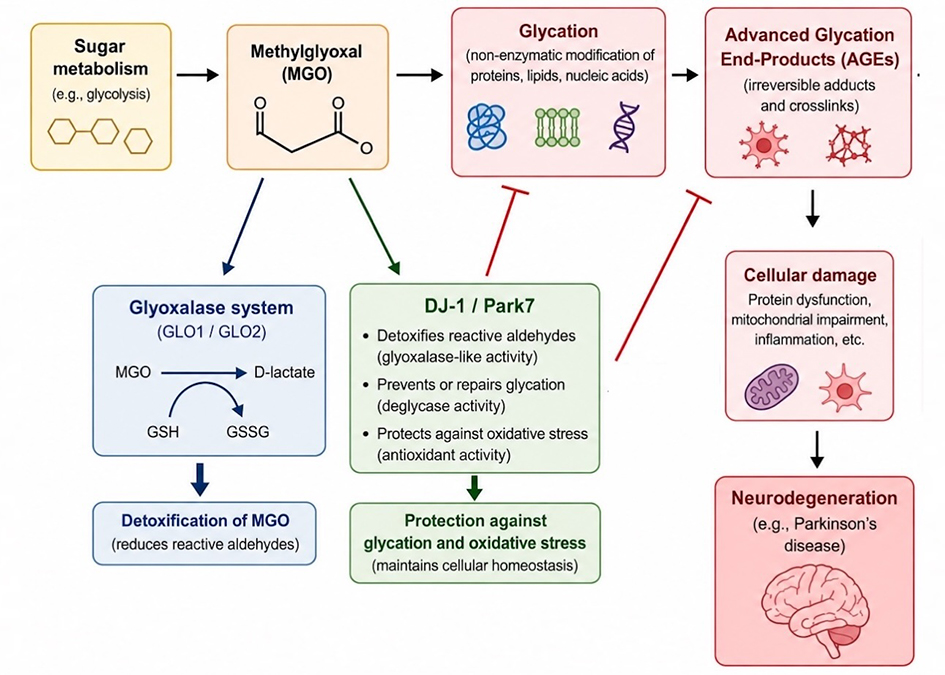
The glycation of proteins, lipids, and nucleic acids arising from sugar metabolism is an important source of cellular damage and may contribute to neurodegeneration in Parkinson’s disease. Cellular defence against glycation relies in part on the glyoxalase system, which detoxifies methylglyoxal and other reactive aldehydes. DJ-1/Park7, a multifunctional protein associated with Parkinson’s disease, is best known for its role in protection against oxidative stress and has also been shown in vitro to prevent or repair protein and nucleic acid glycation. Whereas humans have a single DJ-1 gene, Drosophila has two paralogs, encoding DJ-1α and DJ-1β. Here, we investigated the specific roles of these two proteins in resistance to oxidative stress and their potential interaction with the Drosophila glyoxalase Glo1.
Invited by
Research team(s)
Location
Salle de réunion 4004, IGBMC
Speaker(s)
Dr. Serge BIRMAN
Laboratoire de Biologie Fonctionnelle et Adaptative
UMR 8251
Paris
France