
FRIDAY LECTURES: From hydraulics of pancreas morphogenesis to differentiation: in vivo, organoid and in silico models — Anne Grapin-Botton, Friday, October 2, 3 p.m., IGBMC auditorium
IGBMC is pleased to welcome Anne Grapin-Botton from the Max Planck Institute of Molecular Cell Biology and Genetics in Dresden, Germany.
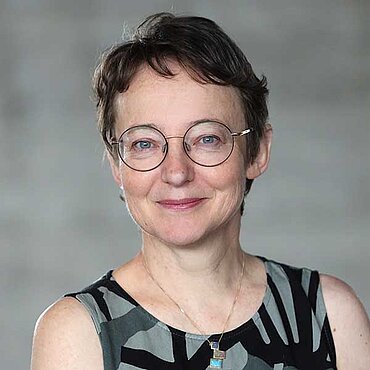
A specialist in organ morphogenesis, she investigates how mechanical forces and fluids shape pancreatic development, from the embryo to the organoid.
A developmental biologist, Anne Grapin-Botton has focused on understanding how fluid mechanics contributes to the formation of hollow organs. Her team combines in vivo models, three-dimensional organoids derived from mouse pancreatic progenitors, human fetal tissue, or pluripotent stem cells, and computational modeling to decipher how networks of lumens form and remodel within the tissue. This work reveals that hydrostatic pressure, epithelial permeability, and internal flows do more than shape the organ’s structure: they also orchestrate the transcriptional control of differentiation, particularly that of endocrine cells.
This research opens up new perspectives, from understanding the fundamental mechanisms of morphogenesis to the identification, through high-content screening, of small molecules capable of influencing the cellular composition and shape of organoids.
Her talk, “From hydraulics of pancreas morphogenesis to differentiation: in vivo, organoid and in silico models”, will provide a rare opportunity to delve into the mechanics of living systems and to engage with a researcher who knows how to make the invisible visible.
The lecture is organized and chaired by Sophie Jarriault.