
MARIE GORET AWARDED THE 2026 THESIS PRIZE BY THE EXOCYTOSIS-ENDOCYTOSIS CLUB
A fresh perspective on a rare disease and a promising talent to watch: the 2026 Thesis Prize of the Exocytosis-Endocytosis Club highlights a young researcher and work that opens up new therapeutic perspectives.
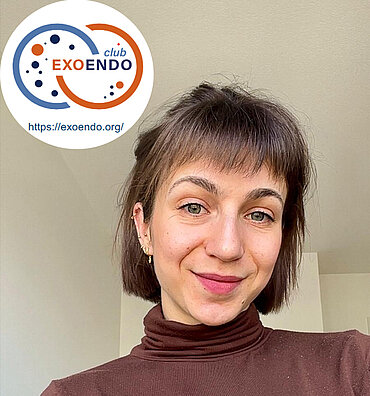
As part of its commitment to scientific research, the Exocytosis-Endocytosis Club actively supports PhD students and their work in the field of membrane trafficking. Each year, it awards a prize for the best PhD thesis in this area. The award includes a €700 grant and an invitation, with free registration, to present the research at the Club’s annual meeting.
For the 2026 edition, the prize was awarded to Marie Goret for her work carried out under the supervision of Drs Jocelyn Laporte and Johann Böhm (CNRS – INSERM – University of Strasbourg).
Her thesis, entitled “Pathological mechanisms and first proof-of-concept therapy for Dynamin-2-associated Charcot Marie-Tooth neuropathy”, provides significant advances in the understanding of this disease and opens new research perspectives.
Her work will be presented at the 28th annual meeting of the Club, which will take place in Aussois from 27 to 29 May 2026.
The Club commends the high quality of this work and extends its congratulations to the awardee. It also highlights the outstanding level of all applications, reflecting the dynamism of the scientific community.
For more information: https://exoendo.org/
_ _ _ _ _ _ _ _ _ _ _ _ _ _ _ _ _ _ _ _ _ _ _ _
Pathological mechanisms and first proof-of-concept therapy for Dynamin-2-associated Charcot Marie-Tooth neuropathy
Short title: One gene, two diseases, one balance
DNM2, encoding a GTPase involved in endocytosis and membrane dynamics, is mutated in two distinct disorders: centronuclear myopathy (CNM) and Charcot-Marie-Tooth neuropathy (CMT). While CNM is caused by gain-of-function mutations, the mechanisms underlying CMT remained unclear. This research highlights that CMT results from loss of DNM2 function and, strikingly, that CNM and CMT mutations can mutually compensate. Their combination restores biochemical activity in vitro and rescues neuromuscular phenotypes in vivo. These findings establish an unprecedented paradigm in which two pathogenic mutations in the same gene counterbalance