
AGING: WHY DO MUSCLES LOSE THEIR ABILITY TO REPAIR THEMSELVES?
As we age, muscles become less effective at recovering from injury.
One of IGBMC’s research teams has identified a mechanism that could contribute to this phenomenon. Through studies conducted in mice, the researchers show that the androgen receptor – a group of sex hormones that includes testosterone – plays a role in maintaining the stem cells essential for muscle repair. However, androgen levels in the body decline with age…
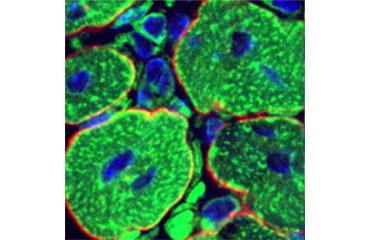
The link between male sex hormones and muscle strength is well established: androgens, a family of hormones that includes testosterone, contribute to muscle growth during development, and their blood levels are correlated with muscle mass and strength. However, the role of these hormones in muscle repair is less well understood.
Stem cells to repair muscle
When a muscle is injured, torn or traumatised, a repair process lasting approximately one month is set in motion. The body relies in particular on muscle stem cells. These cells have two main functions: they produce new, functional muscle cells to rebuild damaged fibres, and they self-renew to maintain a reserve that will enable the repair of future injuries. At the Institute of Genetics and Molecular and Cellular Biology (IGBMC) in Illkirch, Inserm researcher Delphine Duteil and her colleagues decided to investigate the role of androgens in this process. Indeed, “muscle stem cells express the androgen receptor and can therefore, in principle, respond to this hormonal signal,” explains the researcher.
To do so, the team first studied muscle injury repair in male mice genetically modified to lack the androgen receptor in their muscle stem cells. After inducing muscle damage in young animals, the researchers observed impaired repair, resulting in the formation of muscle fibres with structural abnormalities, along with the development of fibrosis (an accumulation of scar tissue) and inflammation. The damage was even more severe following a second injury, as the pool of muscle stem cells had become depleted.
The team complemented these observations with molecular analyses of muscle stem cells from non-genetically modified animals. The results showed that, during the repair process, activation of the androgen receptor triggers the expression of several groups of genes in muscle stem cells. This hormonal signalling therefore contributes both to their self-renewal and to their ability to differentiate into mature muscle cells.
With age, a weakened repair mechanism
The team immediately considered whether these findings could be extended to older individuals, who naturally have lower androgen levels as a result of ageing. The researchers wanted to determine whether this hormonal decline contributes to muscle weakness.
As expected, they observed lower testosterone levels in aged mice. They also found reduced expression of the androgen receptor in their muscle cells. The repair of induced muscle injuries was severely impaired, but administration of a testosterone derivative partially restored the process. “These findings indicate that declining androgen levels and androgen signalling mechanisms contribute to impaired muscle regeneration during ageing,” explains Delphine Duteil. “However, they are not sufficient on their own to draw conclusions about the potential benefits of hormone therapy in humans,” she stresses.
The team also investigated female mice. Although circulating androgen levels are much lower in females than in males, their muscle stem cells nevertheless express specific receptors for these hormones. However, removing these receptors had no effect on the repair of experimentally induced muscle injuries. “The mechanisms regulating muscle repair therefore appear to differ between males and females. The potential role of other hormonal pathways, particularly those involving oestrogens, remains to be explored,” concludes Delphine Duteil.
Author: A. R.
_____________________________________________________________________________________________________________
CNRS BIOLOGIE - 6 november 2026 - www.inserm.fr/actualite/vieillissement-pourquoi-les-muscles-perdent-ils-leur-capacite-a-se-reparer/
Find out more J. Rizk et coll. Androgen receptor imprints satellite cell stemness and preserves their reservoir for lifelong regeneration and optimal repair. Science Advances, 9 septembre 2026 ; DOI :10.1126/sciadv.aec8073
Contact :
Delphine Duteil
Inserm Researcher
duteild@igbmc.fr