

TFIIH, a multifunctional complex involved in transcription, DNA repair and cell division
Subgroup Leader : Emmanuel COMPE
Teams : Genome expression and repair
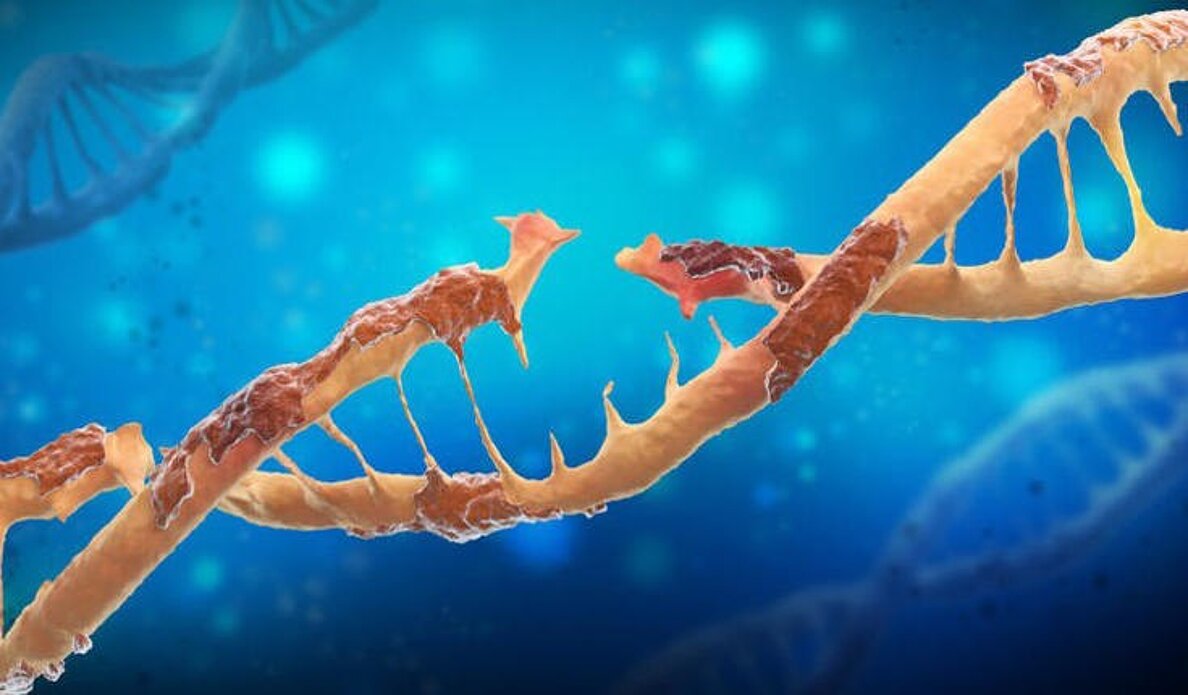
Transcription, one of the key steps in gene expression in response to various stimuli in the body, such as stress or hormones, requires a combination of factors. The harmful action of chemical or physical agents that cause damage to DNA disrupts gene expression. If these lesions are not removed by effective repair systems, they will cause mutations that can lead to cancer or increase aging. TFIIH, a complex made up of ten subunits, plays a key role in both gene transcription and gene repair. Mutations in some of the TFIIH subunits are responsible for three genetic diseases, xeroderma pigmentosum (XP), trichotyodystrophy (TTD) and Cockayne syndrome (CS), the phenotype of which results from defects in both DNA repair and gene expression. XP patients develop melanoma very early in life, while TTD and CS patients age prematurely. With the help of biochemistry, genetics and cell biology, we are studying the mechanisms of aging and cancer in various cell systems and animal models deficient in DNA repair and transcription. We are also developing a research axis on melanoma aimed in particular at establishing new therapeutic solutions against this cancer.
Our objective is to improve our understanding of the mechanisms that regulate the expression of genes encoding proteins at the transcriptional level and their maintenance of their integrity. The growing amount of data shows that the expression and maintenance of the integrity of genetic information are intimately linked. Errors in each of these crucial cellular mechanisms lead to somatic or hereditary diseases like cancer, but are also involved in natural mechanisms like aging. Our team tries to answer the following questions :

ANR
Fondation ARC
INCA
Labélisation Ligue contre le Cancer
PharmaMar company
Article in a journal
Proceedings of the National Academy of Sciences of the United States of America ; Volume: 110 ; Page: E212-E220
Article in a journal
PLoS Genetics ; Volume: 9 ; Page: e1003611
Article in a journal
Proceedings of the National Academy of Sciences of the United States of America ; Volume: 110 ; Page: E2261-E2270
Article in a journal
Molecular Cell ; Volume: 48 ; Page: 785-798
Article in a journal
The EMBO Journal ; Volume: 31 ; Page: 3550-3563
Article in a journal
DNA Repair ; Volume: 10 ; Page: 714-721
Article in a journal
Journal of Nucleic Acids ; Volume: 2010 ; Page: 616342
Article in a journal
Cell Cycle ; Volume: 9 ; Page: 90-96
Article in a journal
The Scientific World Journal ; Volume: 10 ; Page: 633-643
Article in a journal
EMBO Journal ; Volume: 28 ; Page: 2971-80